Every successful dye job starts with one question: What kind of fibre are we working with?
It might not be the most glamorous part of the process, but Fibre Identification and Testing is one of the most important steps we take at Luxe Revival Carpets. Whether we’re restoring a rug, repairing a bleach spot, or transforming a full room carpet, understanding the fibre ensures we use the correct dye, the right method, and deliver results that are permanent and guaranteed.
Why Fibre Type Matters
Different carpet and upholstery materials behave very differently when exposed to dye. Some absorb colour easily. Others resist it. Some need specific heat settings. Others can’t tolerate alkaline solutions. Misidentifying a fibre can lead to:
- Poor dye uptake or patchy colour
- Colour bleeding or transfer
- Fibre damage or shrinkage
- A finish that fades, cracks or rubs off
That’s why we test every single job before any dye is applied.
What Fibres Can We Dye?
Thanks to our specialist methods and product range, we can safely and successfully dye all common carpet and upholstery fibres, including:
- Wool – soft, natural, and common in high-end rugs and carpets
- Silk – delicate and luxurious, often used in Oriental rugs
- Nylon – strong, stain-resistant and dye-friendly
- Polypropylene (olefin) – tricky to dye, but yes — we do it!
- Acrylic and blended fibres – tested for compatibility first
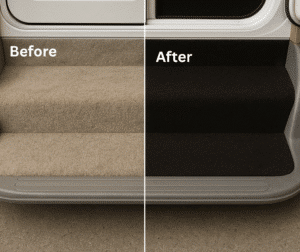
- Automotive-grade carpet fibres – often synthetic or blended
Once we know what fibre we’re dealing with, we choose the correct dye formulation, temperature range and application method.
How We Identify Carpet or Fabric Fibres
We use a combination of:
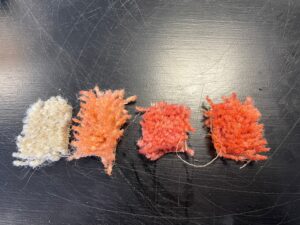
- Burn testing – safe, microscopic fibre sample is ignited to analyse burn characteristics
- Visual and texture analysis – trained by years of hands-on experience
- Water absorption and reaction tests – how the material behaves under controlled treatment
- Manufacturer reference (if available) – for known products or automotive trims
These methods let us quickly, accurately determine fibre type on-site — even if the carpet is decades old or previously altered.
What Happens After Testing?
Once the fibre is confirmed, we can:
✅ Select the appropriate dye
✅ Adjust application techniques for optimal results
✅ Avoid damage from incorrect pH levels or heat
✅ Guarantee permanent bonding and even finish
✅ Provide better long-term durability and colourfastness
This step is especially important for mixed-fibre installations, antiques, and vehicle interiors — where one mistake can ruin the entire surface.
FAQs – Fibre Identification & Testing
Q: Do you test every job?
Yes — it’s part of our standard prep. We never skip it.
Q: What if my carpet is synthetic — can you still dye it?
Yes! We can dye all major fibres, including polypropylene, nylon and blends. It’s just a matter of using the right process.
Q: Do I need to know what type of carpet I have before booking?
Not at all — we’ll determine that on-site during the consultation.
Q: Will testing damage my carpet?
No — we use tiny, hidden samples or safe surface tests. Nothing will be visible or harmed.
Q: Does this cost extra?
No — fibre testing is included as part of every dyeing service we offer.
Trusted By Professionals — Backed by Science
At Luxe Revival, we don’t guess — we test. Our fibre identification process is part of what sets us apart in the industry, and it’s the reason we can offer guaranteed, life-long results for every carpet, rug, upholstery or vehicle interior we treat.
📱 Want to know what your carpet’s made of — and how we can bring it back to life? Contact us today via phone, WhatsApp or message for a free consultation.